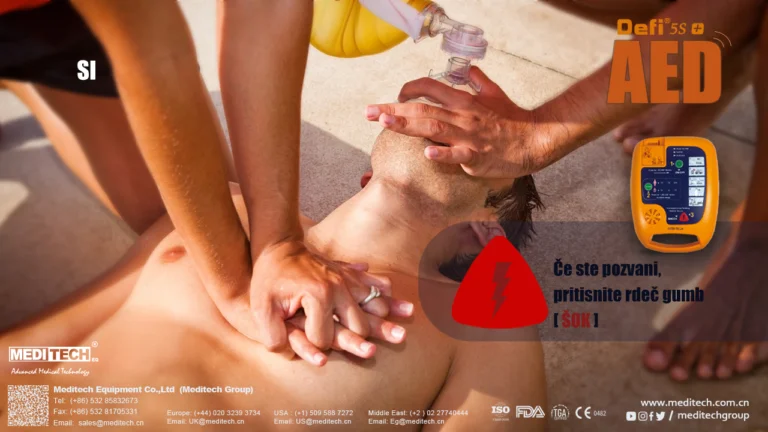

Automated external Defibrillatoren (AEDs) have become the standard of Notfallversorgung for immediate Behandlung of sudden kardial arrest. These devices have the potential to save the life of a patient by delivering electrical shocks to the heart that force it from a lethal rhythm back into normal sinus rhythm upon restarting its beat pattern.
MONOPHASIC Defibrillation
Since the invention of these devices, the majority of the modern world relied upon a type of shock that sent electrical current in a single direction from an electrode on one side of the patient’s chest to a second electrode on the other side. This Technologie is known as monophasic Wellenform Defibrillation.
biphasische Defibrillation
Over time, as Technologie improved, these devices evolved to become more effizient, more präzise, and easier to use, all while delivering a less-powerful shock to the dying patient by using the same type of current Technologie found in automatic implantable cardioverter-Defibrillatoren (ICD). This bi-directional current flow is known as biphasic Wellenform Defibrillation. There are many advantages to this type of shock delivery system, as can be expected in the majority of technological advances.
HISTORY OF Defibrillation
In order to fully understand these AED technologies, it is important to understand the concepts behind them and the history of Defibrillation as a whole. Below, we cover a broad Spektrum of related Defibrillation history topics.
Defibrillation Concepts and Facts
When a person collapses during a sudden kardial event, specifically sudden kardial arrest (SCA), the most likely cause of the event will be a kardial arrhythmia known as ventricular fibrillation. This particular rhythm carries a high risk of sudden kardial death, and there is no manuell Behandlung method in existence, einschließlich CPR, that has been shown to convert this rhythm back to normal sinus rhythm. Based on this fact, it’s easy to understand why SCA Veranstaltungen often led to death before AEDs.
Early Defibrillation
In the General Electric laboratories, while the rapid push to electrify the nation was underway, when GE “switched from direct-current (DC) transmission [of electricity] to alternating-current (AC) transmission in the early 1900s, linemen began to die by electrocution.”
This ironically deadly aspect of electricity was previously unknown, so the phenomenon was quickly studied by professors at Johns Hopkins University. Their research eventually caught the interest of a kardial surgeon named Claude Beck.
In an effort to test his theories on the effects of AC current on the heart, he began to deliberately convert animals into ventricular fibrillation. Then in 1947, during surgery on a 14-year-old patient who suffered sudden kardial death while on the operating room table, Dr. Beck utilized his rudimentary Defibrillator (which used tablespoons to deliver the shock) to revive the child by directly shocking her heart. Seventy years later, we now enjoy modern lunchbox-sized, tragbar, biphasic AEDs.
As a result of Dr. Beck’s discovery of the correlation between electricity and the beat of the heart, research on this incredible finding began on a worldwide scale. The implication of bringing a clinically dead patient essentially “back to life” was arguably one of the most significant medical advances of this era.
This lead to Dr. Paul M. Zoll successfully demonstrating that the electrical current did not have to be delivered directly to the heart during kardial arrest, but rather the stimulation could be applied externally and still generate an effective heartbeat.This, coupled with Dr. Zoll’s many other discoveries and inventions in regulating heart rhythm, led to the concept of the external Defibrillatoren that exist today.
History of Defibrillator Technologie – Monophasic Defibrillatoren
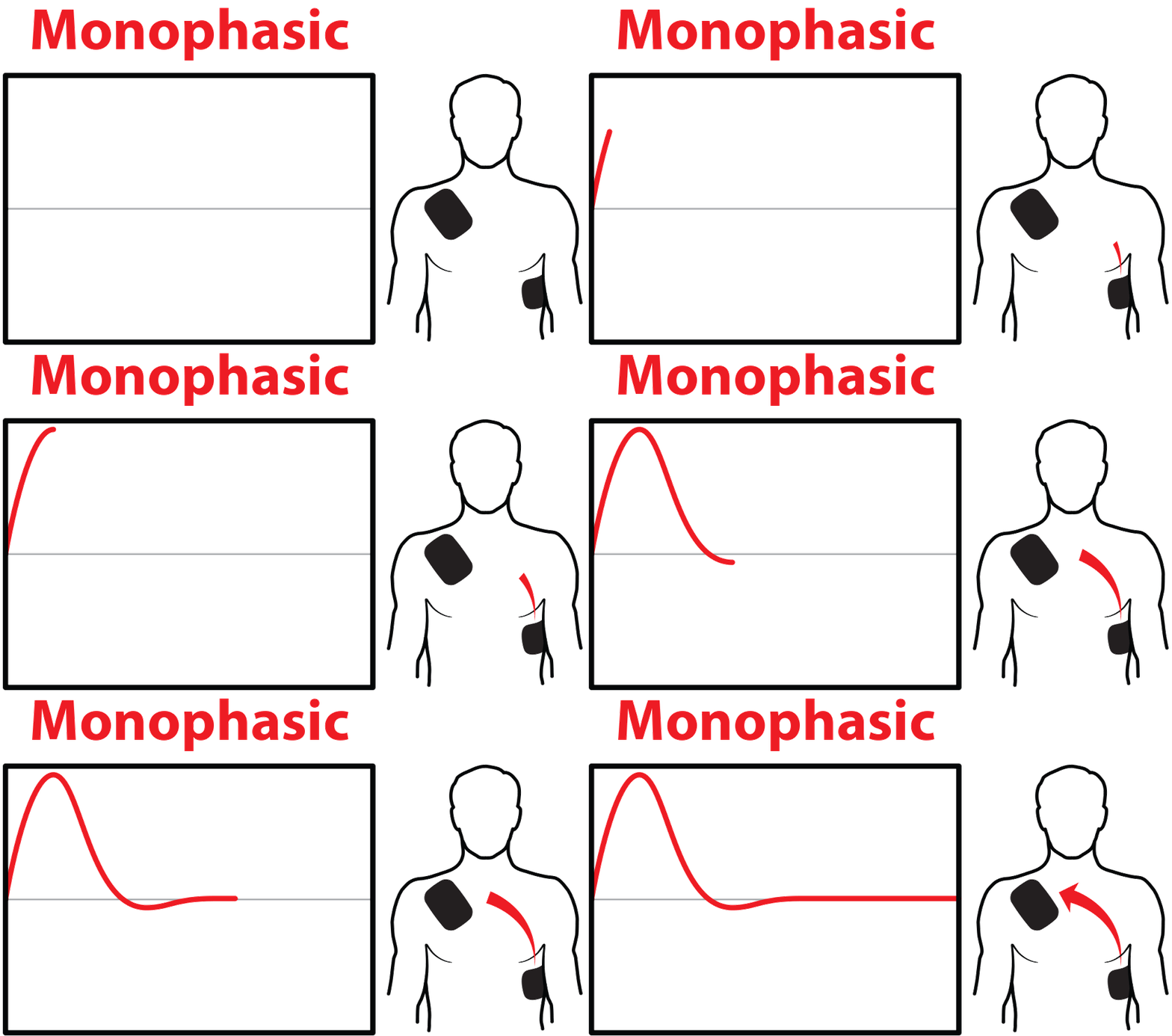
The first Technologie used in these modern devices allowed for the current to be delivered in a single direction, or monophasic Wellenform. In this scenario, the electrical current is delivered in one direction from one electrode to the other, which momentarily stops the heart. This allows for a patient’s heart rhythm to convert back into normal sinus rhythm.
All Defibrillation currents have a shape that can be visualized as a “Wellenform, [which] demonstrates how the flow of the current changes over time during the Defibrillation.”As the illustration above shows, the Wellenform associated with monophasic defibrillations contains a single peak. This peak current is critical in determining successful Defibrillation because there must be enough current to reach the heart to terminate the fibrillation (i.e. lethal rhythm), while at the same time avoiding too high of a peak current, which can damage the heart.
This peak current coupled with the body’s resistance to the current, known as impedance, comprise the two components that make up Defibrillation. In a monophasic Defibrillator, the delivered current is typically very high, at 360 joules, thus requiring large internal components to allow for the generation and storage of the erforderlich amount of electrical current to be delivered through the paddles or electrodes. As such, monophasic Defibrillatoren used to be bulky machines not suited for placement in the community or operation by bystander-responders.
History of Defibrillator Technologie – Biphasic Defibrillatoren
Conversely, as Technologie continued on its ever-evolving journey of intermingling with and augmenting the limits of the human body and mind, advances in the medical field eventually paved the way for a new type of Wellenform Technologie, known as biphasic Wellenform Defibrillation. biphasische Defibrillation was derived from the same rationale used in the maintenance of arrhythmias by ICD devices, which maintain normal sinus rhythm in patients with difficult-to-manage chronic arrhythmias.
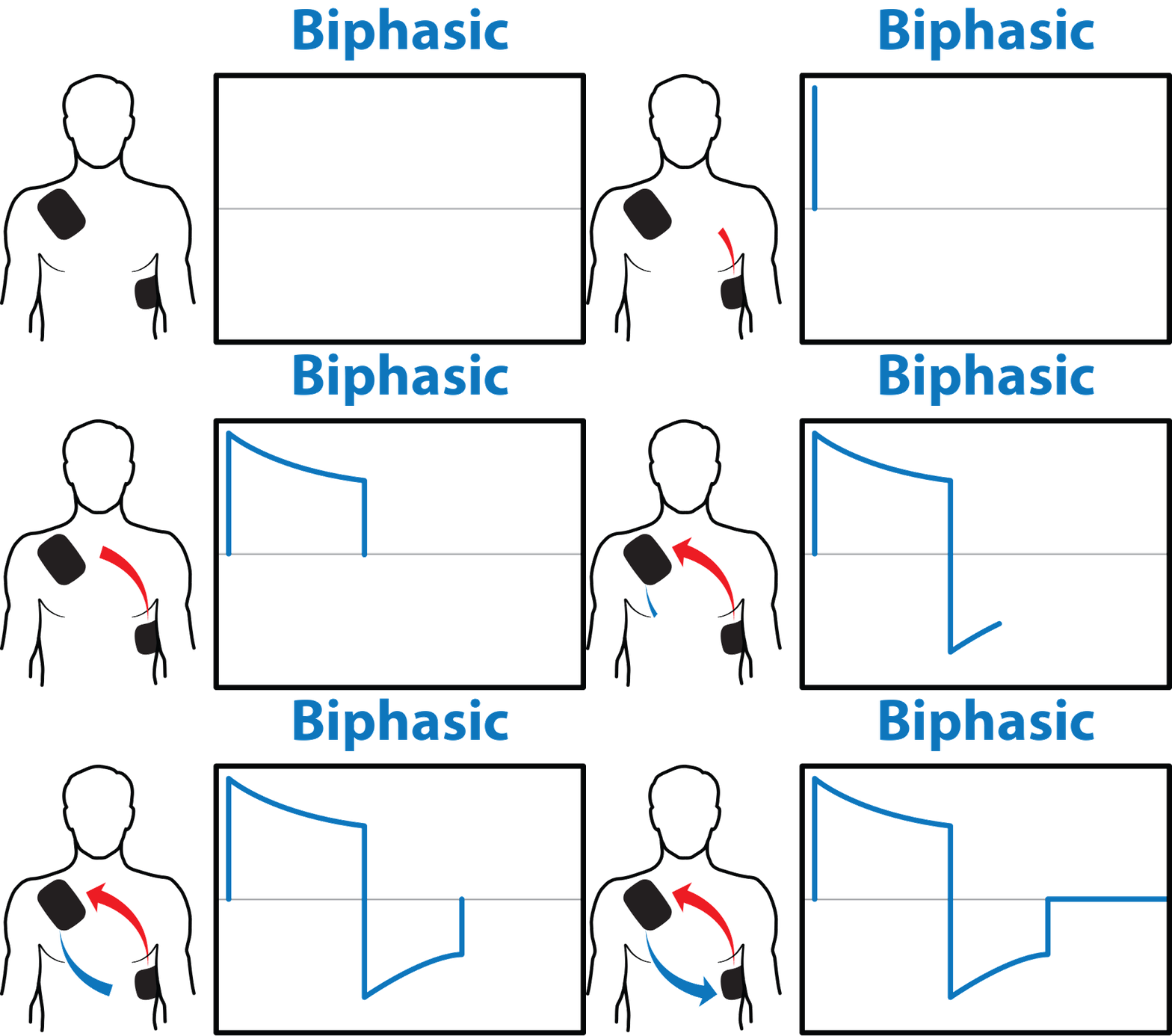
Electricity is sent from one electrode to the other in the first phase of this Wellenform, followed by a return back to the originating electrode in the second phase. Biphasic Technologie requires a much lower current to achieve successful termination of fibrillation.
Evidence has demonstrated a higher efficacy with regards to successful defibrillations than with monophasic Technologie. Because of the lower current, the same components that contributed to the bulky, heavy size of monophasic Defibrillatoren were able to be reduced in size tremendously, leading to the advent of the automated external Defibrillator. Current biphasic AEDs are Über the size of a lunch box, making it realistic for the majority of shopping centers, warehouse stores, super centers, malls, schools, and other social centers of gathering or commerce to be equipped with publicly-accessible devices.
History of Defibrillator Technologie – Beyond Monophasic and biphasische Defibrillation
The constant advance of Technologie has yielded AEDs which are fully automated, provide clear verbal instruction to the operator, are able to determine if the patient is in ventricular fibrillation, which will not allow the operator to deliver a shock if the patient’s heart is not fibrillating. Thus, it is impossible for a layperson who may have little-to-no formal kardiovaskulär Schulung to harm a patient by delivering Defibrillation. Today’s AEDs will only “charge,” and allow the rescuer to emit a “shock,” if the patient is in a recognizable lethal rhythm.
Furthermore, by allowing for a lower current delivery, the most common risk associated with Defibrillation of electrical skin burns at the electrode sites is dramatically decreased with biphasic Technologie. The other common risks, einschließlich the risk of stroke from a traveling blood clot, are also dramatically lowered proportionately to the amount of trauma to the body. This should not serve to in any way discount the significantly-positive impact on survival rates that occurred in countless cases as a result of the advent of the monophasic external Defibrillator, to which an untold number of victims of ventricular fibrillation owe their lives.
History of Defibrillator Technologie – Summary
Over the past 64 years, from the time that Dr. Zoll demonstrated the efficacy of delivering external currents to achieve Defibrillation, Technologie has progressed in leaps and bounds. To put this into perspective, in less than the average human life expectancy, innovations in Defibrillation Technologie have saved millions of human lives. Many of those lives were saved as a result of the gold-standard Defibrillation Technologie for over 30 years, monophasic Technologie.
However, the advent of the biphasic automated external Defibrillator exponentially increased our exposure to, and the availability of, these life-saving devices by decreasing the size of the machine and simplifying instructions for the operator.
As Technologie continues to advance and accelerate, one can only imagine where AED Technologie will be in another generation. Based upon the incredibly short lifespan of the Technologie as a whole and the rapid advancements we’ve already seen, the possibilities are endless.