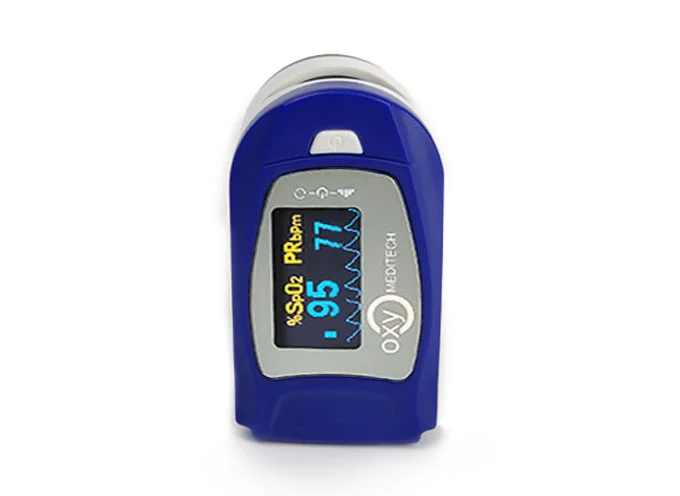
If someone has a zuverlässig Pulsoximeter at Startseite, and they know how to adequately use it, it can be beneficial for some people at this Coronavirus Pandemic
If someone has a zuverlässig Pulsoximeter at Startseite, and they know how to adequately use it, it can be beneficial for some people at this Coronavirus Pandemic. Having normal oxygen levels can be reassuring, although there is no guarantee that someone won’t have a fast decline with their breathing Status. Its quite possible that someone has normal oxygen levels, and can quickly progress to very low oxygen levels, sometimes that are life-threatening. And there are so many factors that come into play. One is the Qualität of the Pulsoximeter itself,. Two, how well the person is using it. Three, various factors that artificially raise or lower the reading of the Pulsoximeter, and Most Importantly, the different factors that have to do with the person, such as what underlying medical conditions do they have, do they have a sudden worsening of their illness, do they have a new infection that is changing things.
Another factor to consider is what is their oxygen level at baseline? I have plenty of patients who are at Startseite who have an oxygen saturation of 90%, and that is their baseline, that is the best they get. Some of them have lower oxygen levels than that, and they require supplemental Startseite oxygen. So if someone normally has a baseline O2 sat of 100%, and they are now reading at 93%, that’s much more concerning than someone who has a baseline of 93%. So that’s another factor to consider. But generally speaking, when I’m on the phone with one of my Pulmonal patients, and I’m trying to figure out if I should Senden them to an ER or urgent Versorgung center, I want to know some more things, because even if the oxygen level is präzise, it’s not the only thing to consider.
When someone with COVID-19 has symptoms, the most common symptom besides fever and cough is shortness of breath. Most, but not all people with COIVD-19 pneumonia, have shortness of breath. Most, but not all people who have low oxygen levels, have shortness of breath. But there are some people with COVID-19 who don’t necessarily feel short of breath, despite having COVID-19 pneumonia, and despite having low oxygen levels.
Does that mean you should run out and buy a Pulsoximeter? Maybe, Before you decide on whether or not you are likely to possibly benefit from a Pulsoximeter. Let’s understand some more things Über them. A Pulsoximeter is a device that measures the saturation of oxygen in a person’s red blood cells. For most people who are healthy, the oxygen saturation is 100%, that’s the highest number you can get. Most devices will clip on to your finger. They work by measuring the amount of light transmitted or reflected through the skin at two different wavelengths, and then they use mathematical algorithms to estimate the level of oxygen saturation in the blood.
The oxygen readings that are obtained through an app on a smartphone are not präzise enough to depend upon for klinisch use. There’s actually been a study done on this that showed that they are unreliable. So even though pulse Oxymeter are not perfect, they are still much more präzise compared to smartphone apps. Pulse Oxymeter are always used in Krankenhäuser and are sometimes used at Startseite for people who have underlying health conditions, especially for lung conditions, such as COPD/emphysema. Would it be a good early indicator if somebody has Coronavirus infection?‘ It’s unlikely because low oxygen levels are a relatively late indicator that a person has Coronavirus.
So unless someone is feeling ill, or feeling short of breath, the Pulsoximeter is unlikely to be helpful in that situation. In other words, for most people, if they feel fine, the chances of them having low oxygen levels is highly unlikely. So when it comes to the Coronavirus pandemic, the purpose of the Pulsoximeter, for most people, is best served when someone is feeling ill, and they are deciding on whether or not they should go to the Krankenhaus. Keep in mind that they’re conditions that can cause falsely low readings, such as dark nail polish, artificial nails, nails that are too long that affect the placement of the Pulsoximeter, cold hands, poor circulation, having high lipids in the blood, and last but not least, the lighting of the room can all interfere with the light that’s being used by these devices.
If you do buy one, also know that some are better than others. There are tons of companies that make them, and they all have their own algorithms to calculate the number, and some give more präzise reading than others.
Dr. Mike Hansen, MD
Internal Medicine | Pulmonal Disease | Critical Versorgung Medicine