
How To Read a Pulsoximeter: Heart and Pulse Rate A tragbar Pulsoximeter is a device that clips onto your finger and reads your heart rate as well as the percent of oxygen in your blood
How To Read a Pulsoximeter: Heart and Pulse Rate
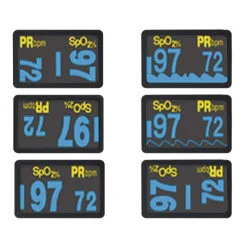
A tragbar Pulsoximeter is a device that clips onto your finger and reads your heart rate as well as the percent of oxygen in your blood. It was developed as a way to detect hypoxia (a condition caused by insufficient oxygen). The hemoglobin in your blood bonds to oxygen and carries it through your circulatory system to your body’s cells. A Pulsoximeter works by emitting an Infrarot light that shines through your body’s tissue to a photosensor on the other side. The Infrarot light is able to detect the amount of hemoglobin that is saturated with (or carrying) oxygen. The Pulsoximeter will Anzeige a number that indicates the percent of hemoglobin that is saturated with oxygen. A Pulsoximeter reading (denoted by SpO2) in the high 90s (i.e. 96%-99%) is considered normal. Here’s how to read a Pulsoximeter.
· Clip the Pulsoximeter on. The Pulsoximeter must be clipped, like a clothespin, onto a part of your body where light can shine through the blood flowing through your arteries. This umfasst your finger (where the Pulsoximeter is most commonly placed on adults), toe, earlobe or across the bridge of your nose. Because pulse oximetry so often occurs on the finger, these devices are also commonly called a finger Pulsoximeter.
· Ensure the Pulsoximeter is giving you an präzise reading. There are some scenarios that will result in the Pulsoximeter providing either an inaccurate reading or no reading at all. A good way to determine whether the Pulsoximeter is providing an präzise reading is to Vergleichen the pulse rate on the Pulsoximeter to the pulse rate you get by taking the patient’s pulse manually. If they do not correspond, the likelihood is that you are not getting an präzise reading form your Pulsoximeter. Some common scenarios that result in an erroneous reading umfassen:
Nail polish, if the Pulsoximeter is clipped on a finger.
· Excessive movement by the patient
· Hypothermia or a cold injury to the extremities
· Anemia (not enough iron in the blood)
· Carbon monoxide poisoning
· Certain types of seizures
· Shock (hypoperfusion) associated with blood loss or poor perfusion
· Remain still. As noted above, excessive movement can result in the Pulsoximeter providing you with an inaccurate reading. Try to remain relatively still while the Pulsoximeter is taking its reading.
· Assess the results. A normal reading, for a person breathing room air, is in the high 90s. A reading of anywhere from 96% SpO2 through 99% SpO2 is typically not cause for alarm. A reading of 95% SpO2 or less could indicate hypoxia and should be investigated. An SpO2 reading of 90% or less indicates significant hypoxia and requires immediate action.
Your Pulsoximeter will also record your heart rate. Normal heart rates are as follows, depicted in beats per minute (bpm):
· Elderly Person (75+): Normal – 90
· Erwachsene: Normal – 60-80 / Rapid – 100+ / Slow – below 60
· Adolescent: Normal – 60-105 / Rapid – 105+ / Slow – below 50
· Child (5-12 years): Normal – 60-120 / Rapid – 120+ / Slow – below 60
· Child (1-5 years): Normal – 80-150 / Rapid – 150+ / Slow below 80
· Infant: Normal – 120-150 / Rapid – 150+ / Slow – below 120
Having a heart rate Monitor on hand can be convenient when exercising as well. You want to be sure that when you work out, you’re keeping a healthy heart rate. You can learn how to burn fat safely and quickly with the excellent Fat Burning Furnace, and now that you know how to read a Pulsoximeter, you can check to make sure that you and your family have normal heart and pulse rates while exercising or when at rest
By:Patricia Graves
meditech Oxymeter: http://www.meditech.com.cn/Finger-Pulse-Oximeter